
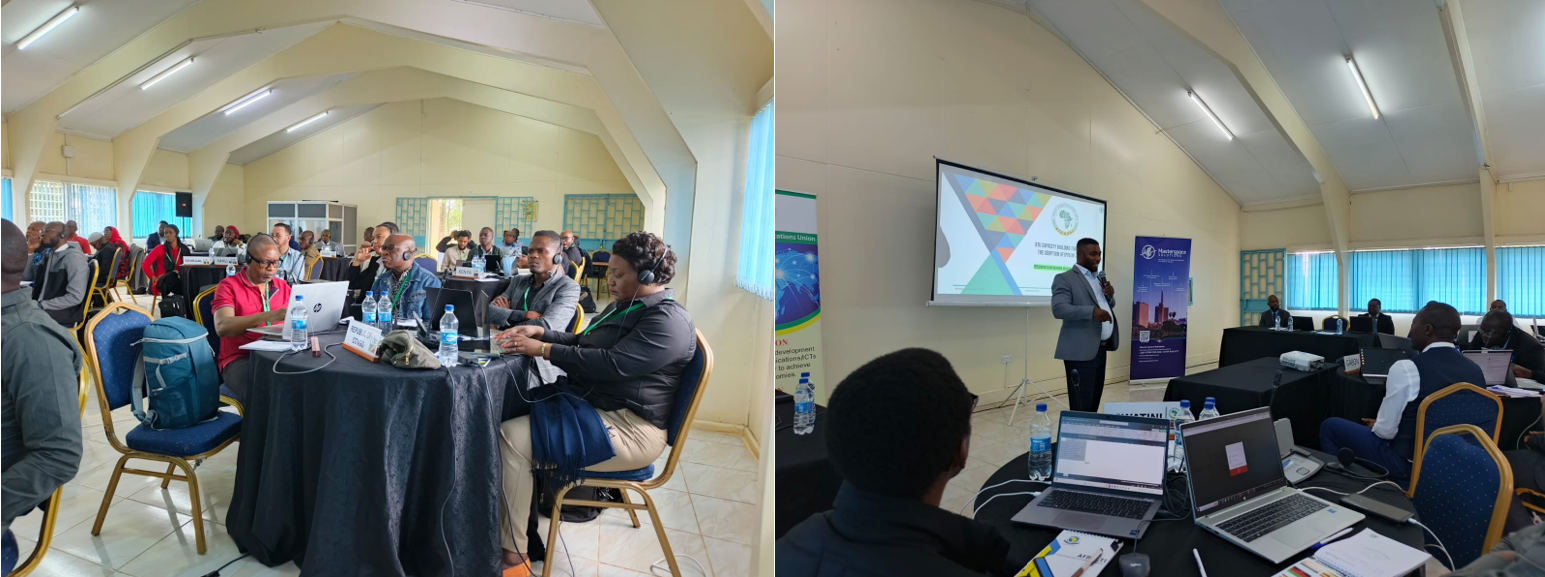
African Telecommunications Union Organizes IPv6 Workshop at AFRALTI to Drive Africa’s Digital Transformation

The African Telecommunications Union (ATU), in its continued effort to support member states in the digital era, recently hosted an IPv6 workshop at AFRALTI in Nairobi, Kenya. The initiative is part of ATU’s Two-Year IPv6 Transition Plan, designed to guide African countries in preparing for the global transition from IPv4 to IPv6 an essential shift driven by the depletion of IPv4 addresses and the growing demand for scalable, secure digital infrastructure.
The workshop brought together 60 delegates from 30 African countries, including policymakers and network engineers, to gain hands-on knowledge and practical insights into IPv6 deployment. Masterspace Solutions, the lead consultant for the IPv6 Transition Project, facilitated the training, providing expertise and guidance to the participating delegates.
Key Highlights from the Workshop
- Stakeholder Engagement: The training emphasized the diverse stakeholders involved in IPv6 adoption, including standardization agencies, IP allocation authorities, telecom service providers, content developers, academia, research organizations, regulatory bodies, e-Government agencies, data centers, internet exchange points, enterprises, and end users.
- Current Adoption Status: IPv6 adoption in Africa stands at 5%, significantly below the global average of 43-48%. Delegates received detailed insights into adoption rates across various African regions and the factors influencing them.
- Challenges to Adoption: Participants explored major barriers to IPv6 deployment, including legacy infrastructure limitations, IPv4-IPv6 compatibility issues, operational complexity in dual-stack environments, deployment costs and ROI concerns, a shortage of IPv6 expertise, security challenges, and low end-user awareness.
- Benefits of IPv6: The training highlighted the advantages of IPv6, such as stronger security, efficient traffic and resource management, automatic configuration, an expanded address space, better support for emerging technologies, smooth coexistence with IPv4, traffic prioritization, and improved mobile device compatibility.
- Promoting Deployment: The workshop underscored the critical role of governments and service providers in driving IPv6 adoption across the continent.
While IPv6 adoption continues to grow, transitional strategies remain crucial, as IPv4 will continue to be necessary for the foreseeable future. Dual-stack deployments are expected to persist for several years, addressing immediate IPv4 scarcity and cost challenges.
IPv6 is more than technology, it is Africa’s launchpad for digital growth. With robust security, seamless performance and endless scalability, the question isn’t if IPv6 will take over, but when Africa will fully embrace it.